
header_4.jpg

Tips & Hints

Tip of the Week

Check Your Bilge Pumps – October 24, 2011

When I’m inspecting the bilge of a boat I naturally test bilge pumps, both electrically and manually operated and I often find problems.

Here are the top problems I find with electric bilge pumps:

  • Incorrect over current protection (fuses / circuit breakers).
  • No over current protection.
  • Pumps not secured – laying on their sides, upside down.
  • Automatic float switches inoperable – broken, obscured, water intrusion.
  • Corroded electrical wiring and connections.
  • Incorrect type hoses.
  • Pumps not sized properly to the boat – too small.
  • Check valves installed – can cause clogs, don’t use them on primary pumps.
  • Installed without vented loops.
  • Hose runs too long.

Here are the top problems I find with manual bilge pumps:

  • Cracked, dry-rotted rubber diaphragms.
  • Incorrect type hoses.
  • Lack of strainers on the bilge end of hose.
  • Hose runs too long.
  • Bilge pump handle missing.
  • Check valves installed – can cause clogs, don’t use them on primary pumps.
  • Installed without vented loops.

In the case of electric bilge pumps, the number one problem I come across is the wrong size fuse for the pump. It’s pretty common especially if you didn’t install the pump your self and / orĀ  don’t have the original manual. I’d estimate that 60% of the bilge pump fuses I check are not correctly sized. Fuse sizes are marked on the bilge pump body and a quick check with a flashlight and mirror you should see the recommended fuse size. Once you have the correct fuse size you should go to the bilge pump fuse and see if the size matches up. If it doesn’t match up, install the correct size fuse. If there is no fuse, maybe the pump is connected to a circuit breaker on an electrical panel – if it is, the breaker is most likely over sized. No worries, just install an inline fuse holder and the correct fuse. OK, what if there is no fuse or circuit breaker? Install one right now.

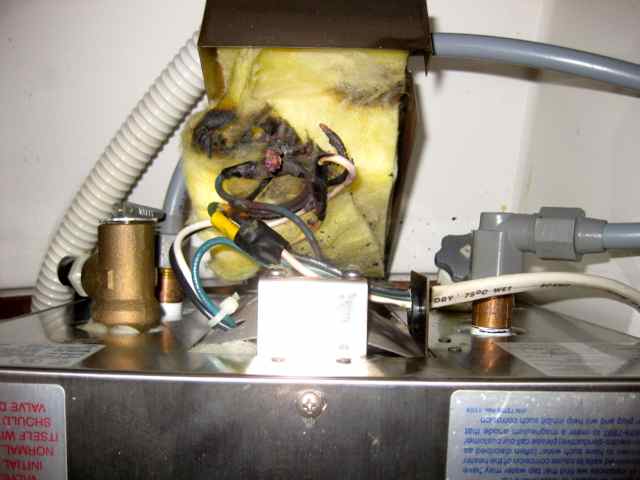
So what’s the big deal about bilge pump fuse size? Well, if the bilge pump electric motor gets jammed or stuck, its rotor (part that rotates) locks and if it locks, it continues to draw more and more electrical current – think hot. Without the proper size fuse, there is nothing to stop the electricity flowing to the pump and wiring and pumps can melt or catch fire.

The question I get from many boat owners is “how or why would the pump get jammed or locked”. Some (hopefully not yours) bilges are full of all types of nasty stuff like dirt, plastic wire ties, string, fishing line, screws, and construction debris like sawdust, etc. Any of these items could cause bilge pumps to jam.

So check and clean your bilges.


Zincs – October 17, 2011

You may have heard that zincs should be replaced when they are 50% depleted. This is not correct. As the surface area of the zinc anode is reduced, its effectiveness goes away exponentially. In addition, the attachment of the zinc to the metal it is supposed to be protecting has been greatly reduced which means that the contact surface between the zinc and metal is not good. For the zinc to properly protect the metal, continuity must be 100%.

So when your dive service report shows zincs at anything less than 20% it’s time for the zinc to be replaced. It’s also a good practice to ask your dive service to leave the old, wasted zincs on your boat so you can take a look at them. What your looking for is the size and shape of the zincs. Again, if the zinc looks about 20-30% of its original size and smooth but worn, that’s a good sign – probably no corrosion issues. But if they are uneven, pot marked and rough, there is a problem – rough and uneven surfaces indicate electrical corrosion and you should get the boat checked for corrosion issues.

Lately I’ve seen two extreme conditions with respect to zinc replacement. In at least 40% of the boats that I inspect that are hauled out of the water for inspection, zincs are either nearly depleted and reported within days of haul out as good to excellent. The other is dive report within days stating zinc replacement when it was obvious that the zincs are very old and depleted. Either way, its bad. In the first case of reporting a zinc to be good to excellent the diver is really doing his client a dis-service. I have been told by some divers that they are trying to economize zinc replacements for their clients so that they ‘save’ money – Obliviously false economy and can cost a lot of $$$ if a propeller, trim tab, rudder or anything else needs replacement. Zincs are cheap relative to the metals they protect. In the second case it is flat out fraud but some dive services get away with it because who can / does check?


Comments on this entry are closed.